


concept & vision
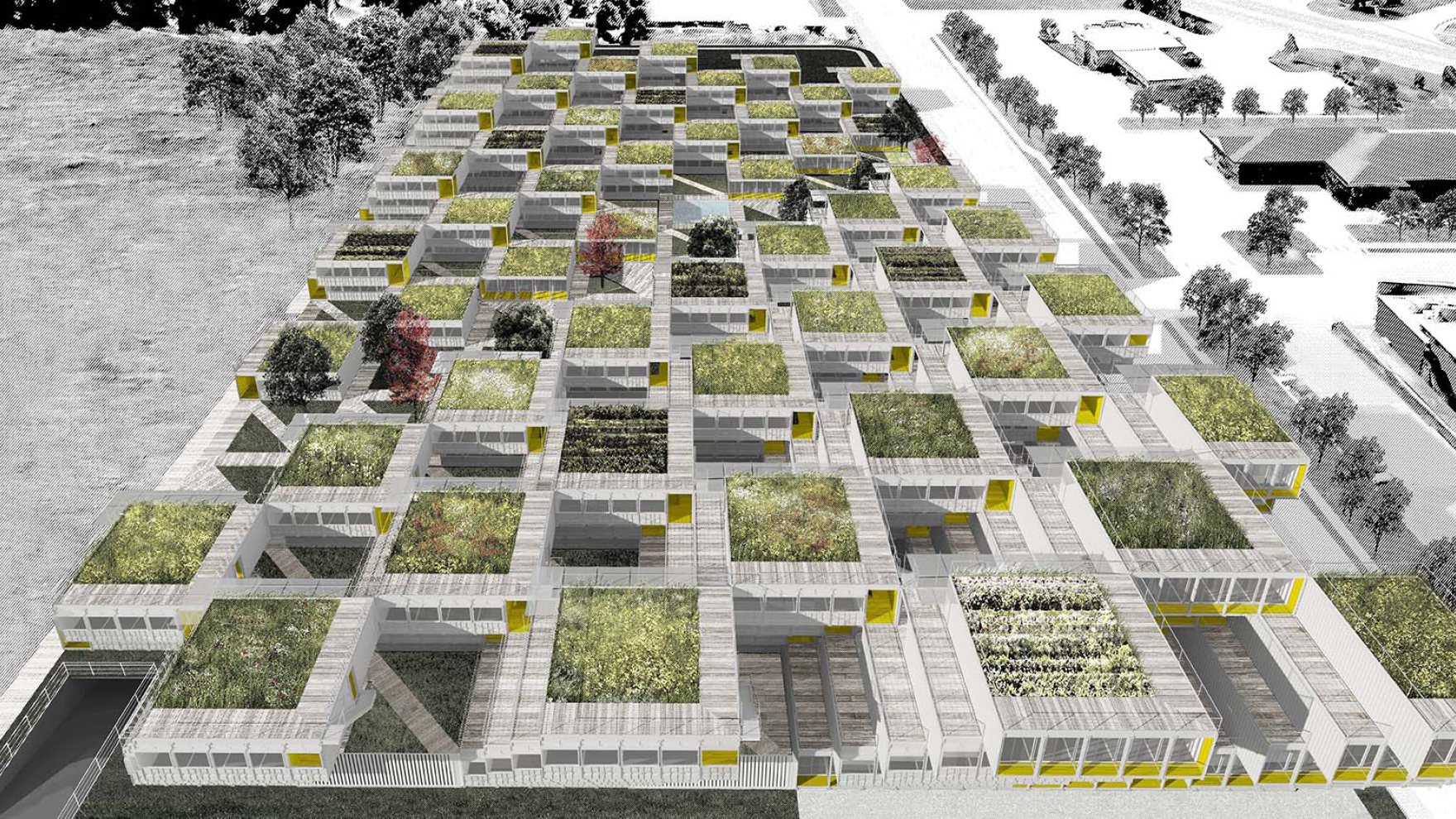
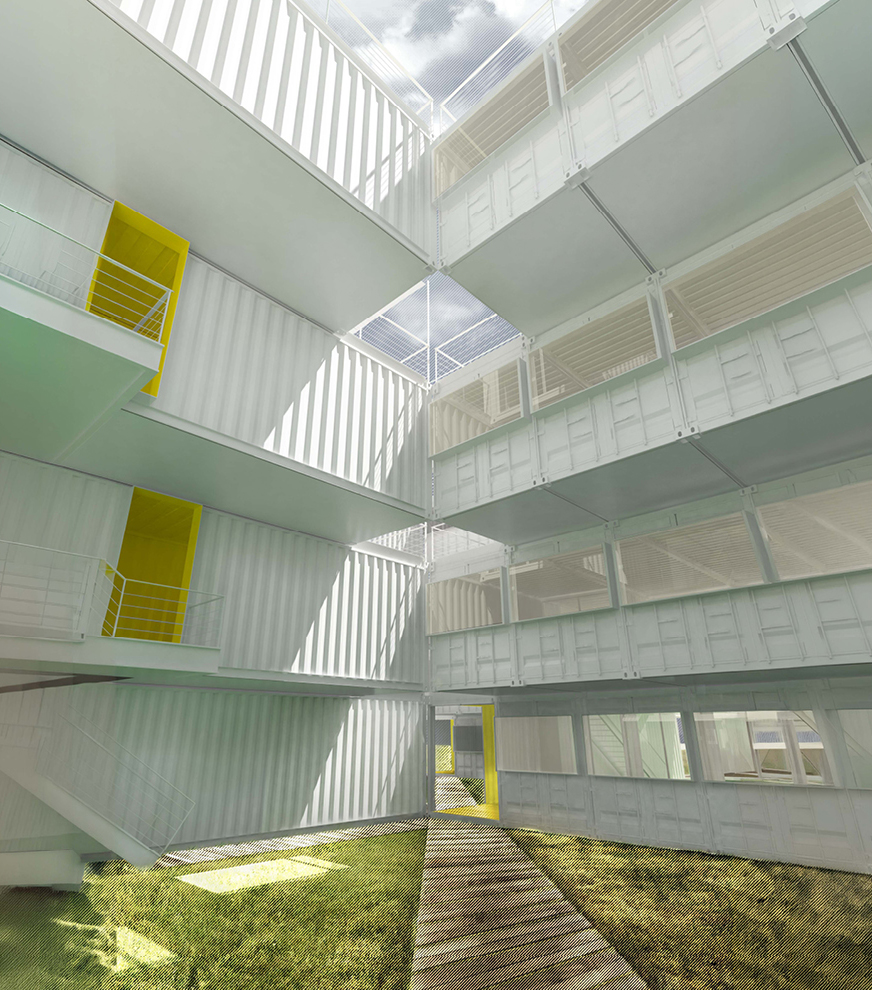
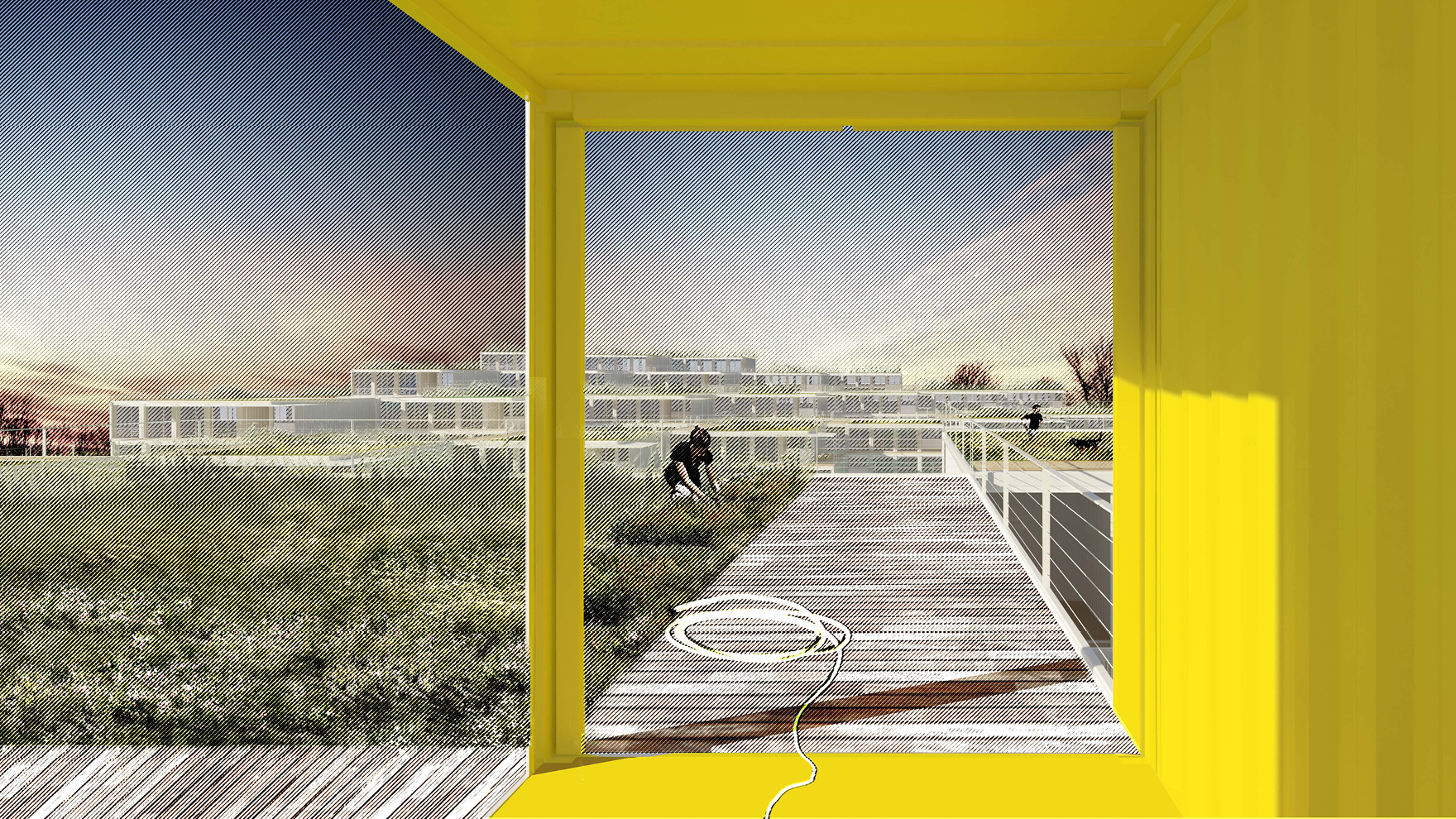
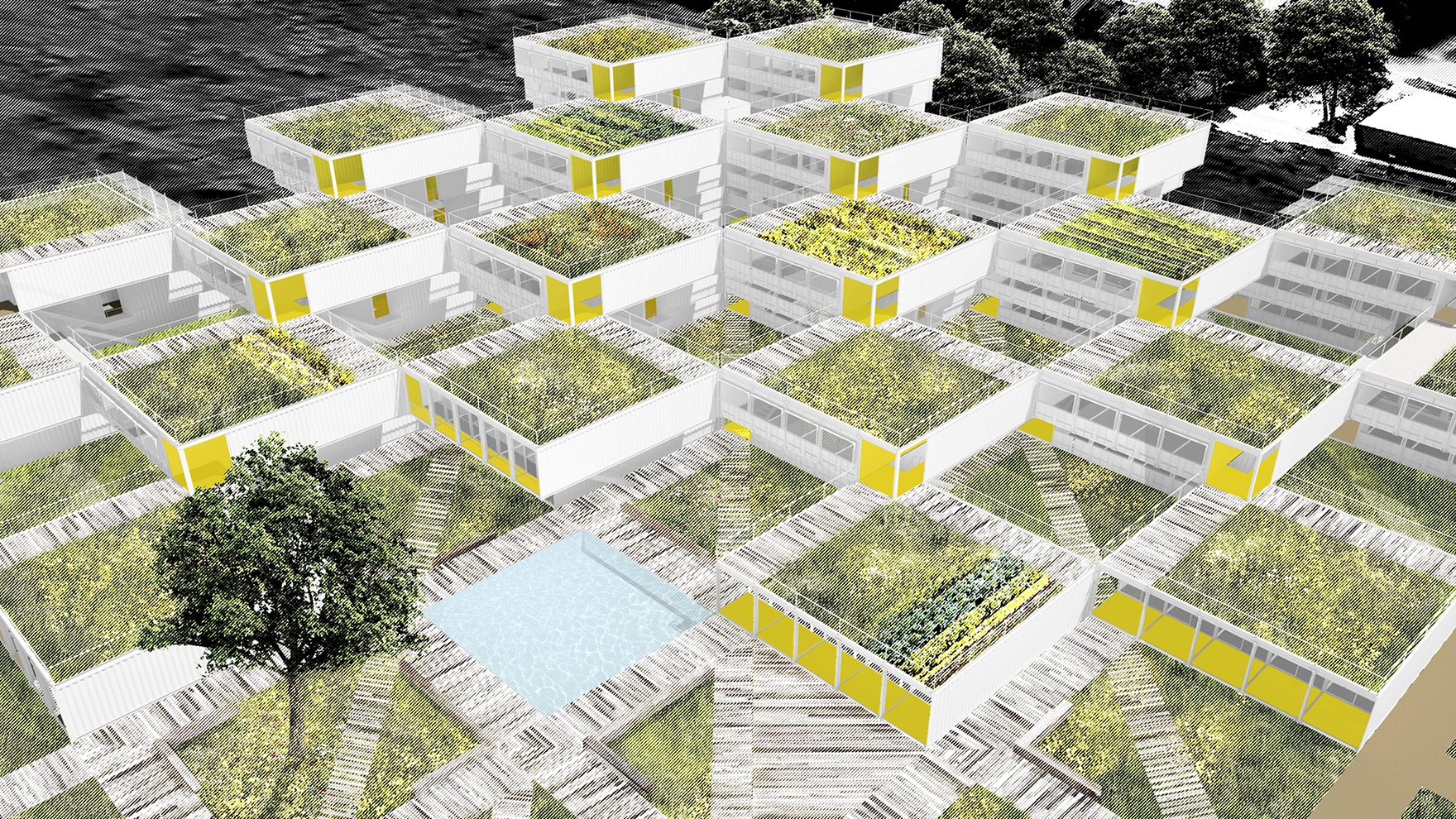
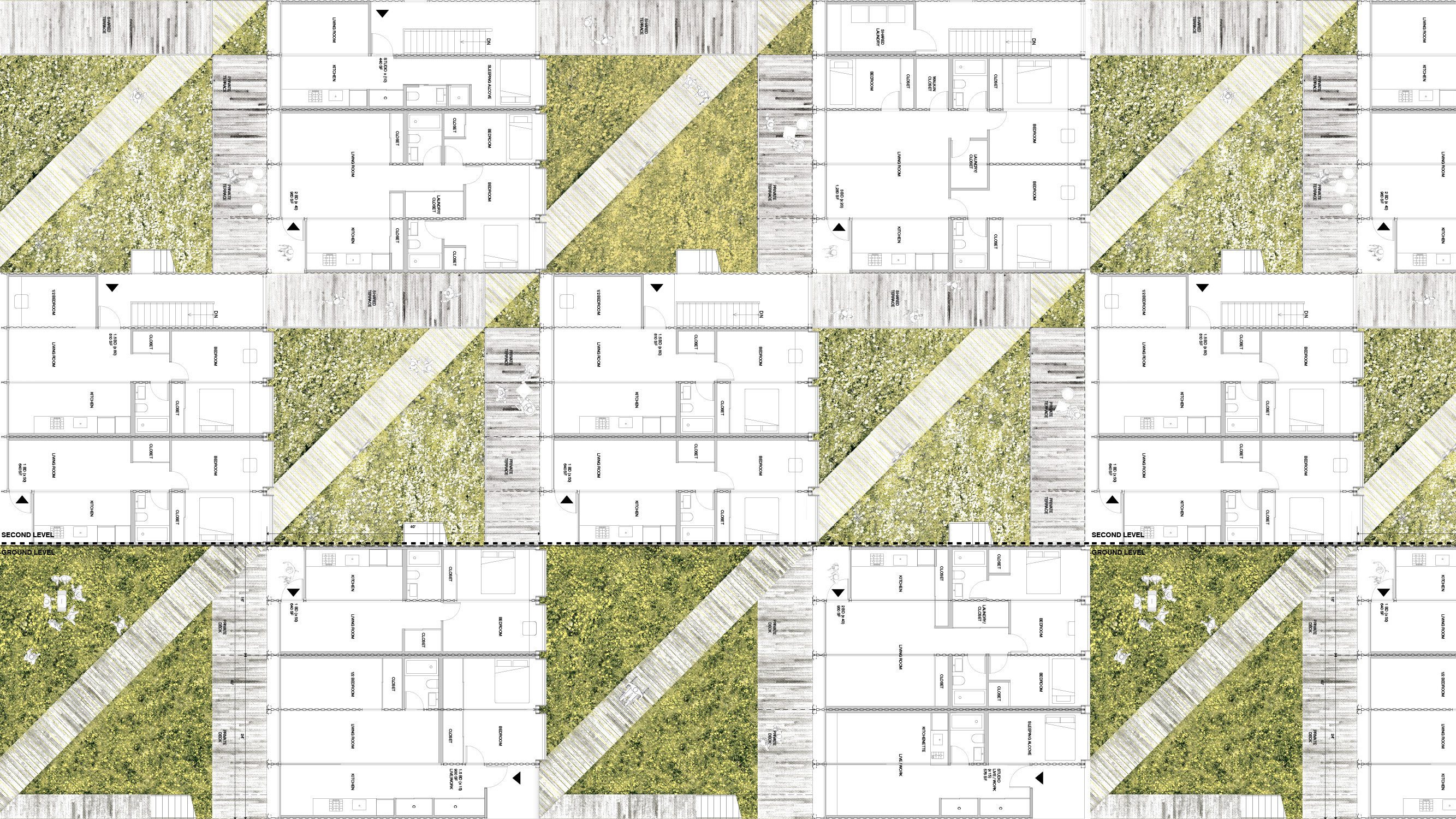
The forty-foot-square blocks are constructed out of a square array of five ISO-standard steel shipping containers, stacked and stepped to form the townhouse blocks—765 containers in total. This represents a sustainable upcycling of resources that, thanks to broad interior vistas, choreographed openings, and refined finishes, can be brought to a high level of domestic comfort and delight. We envision a community woven and stitched together through pathways, courtyards, overlooks, planted rooftops, and private terraces. It’s called Arkansas Crossroads—which along with Arkansas Star is one of the major quilting block patterns historic to this part of the country—in which a stable square grid is enlivened by a crisscross of diagonals, creating a peaceful but dynamic pattern for daily life.
design & architecture
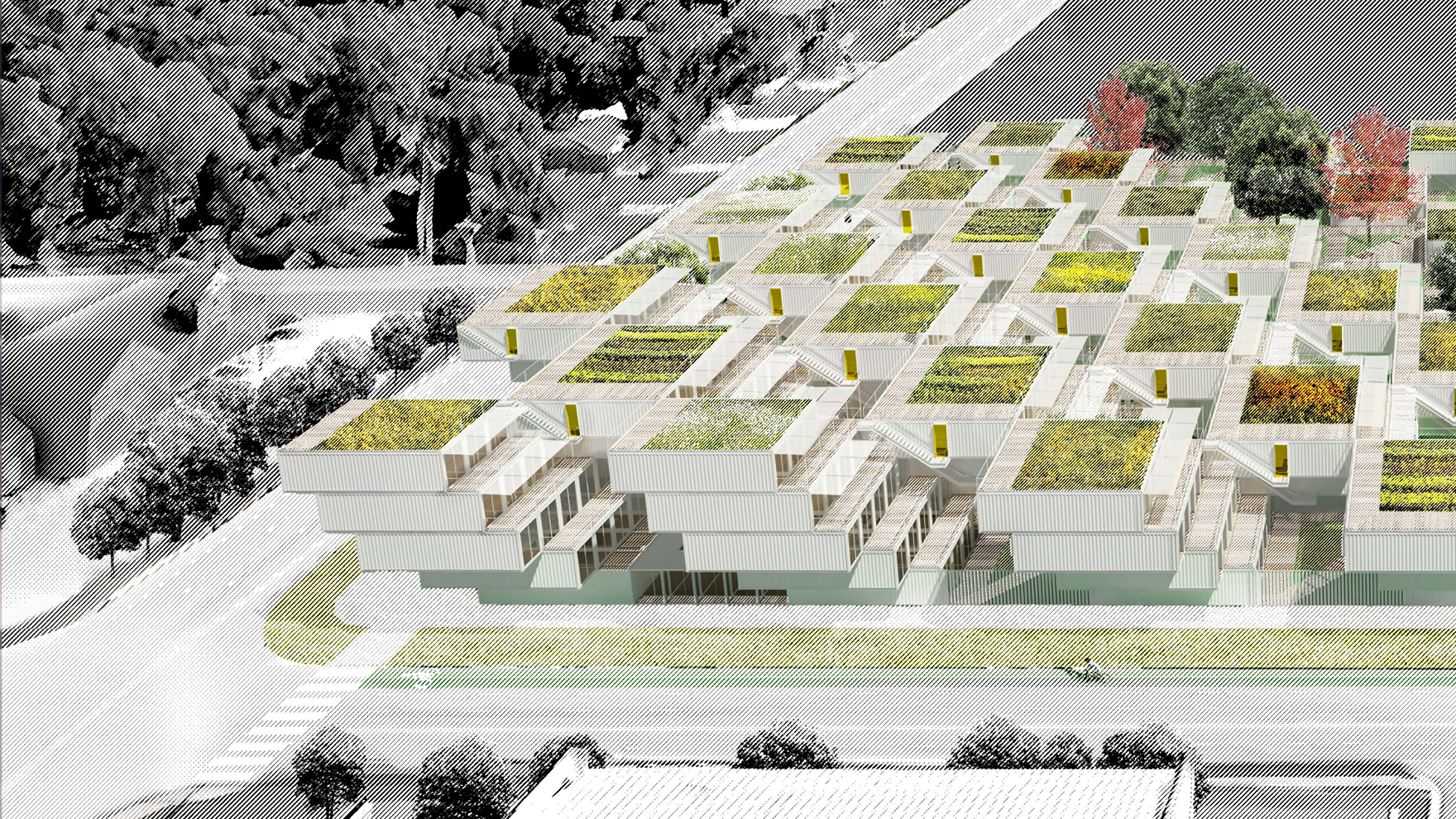
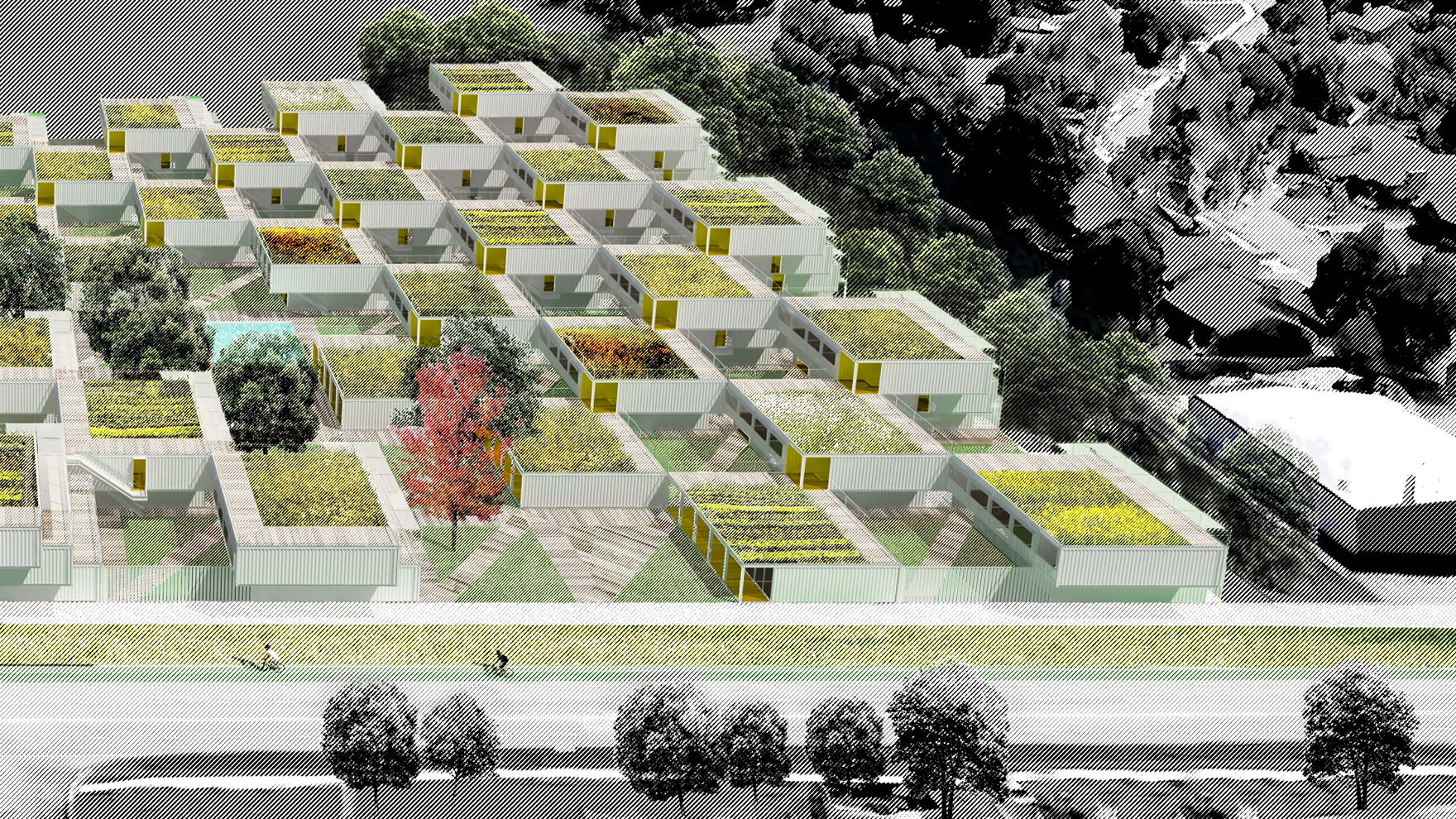
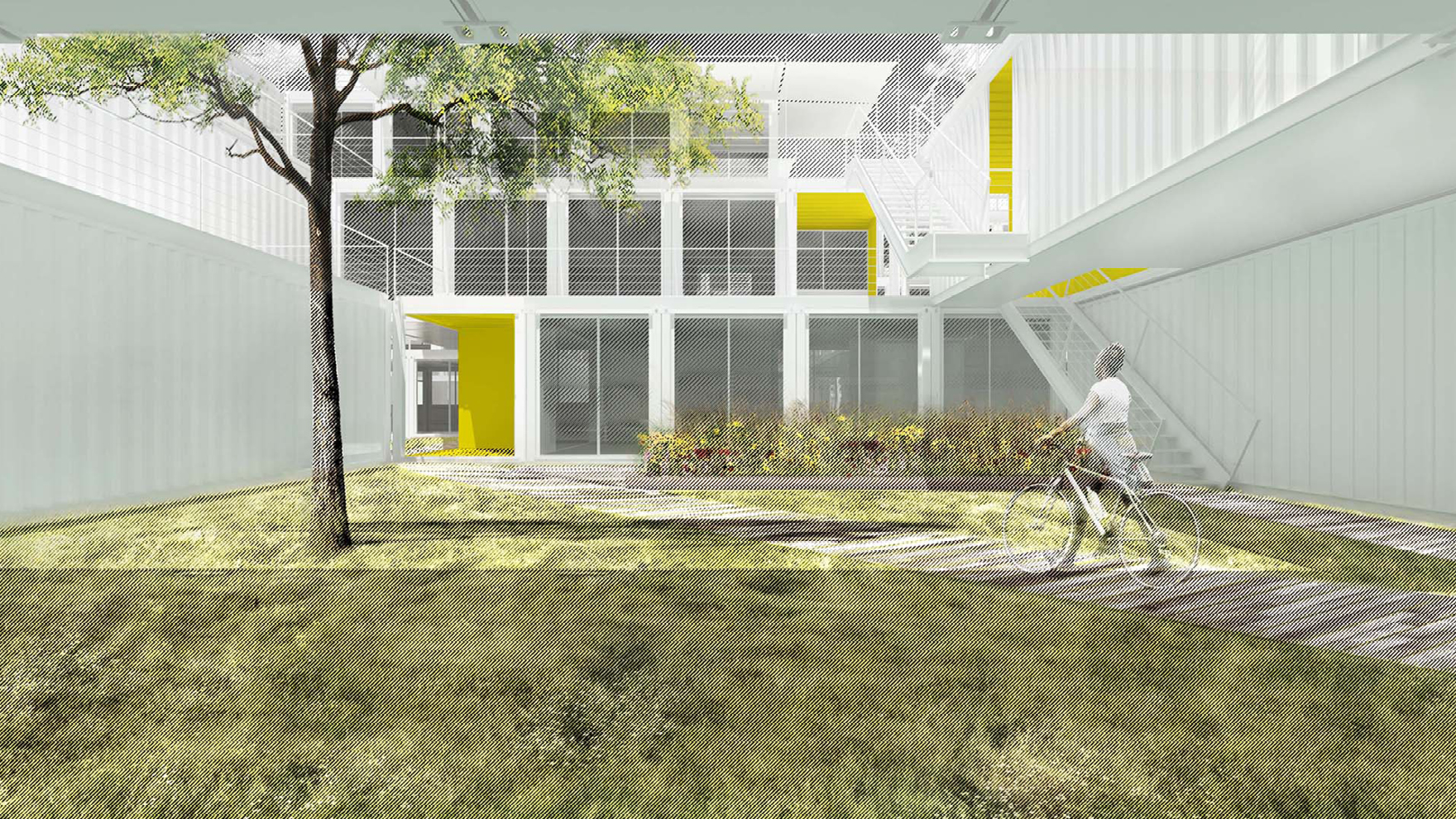
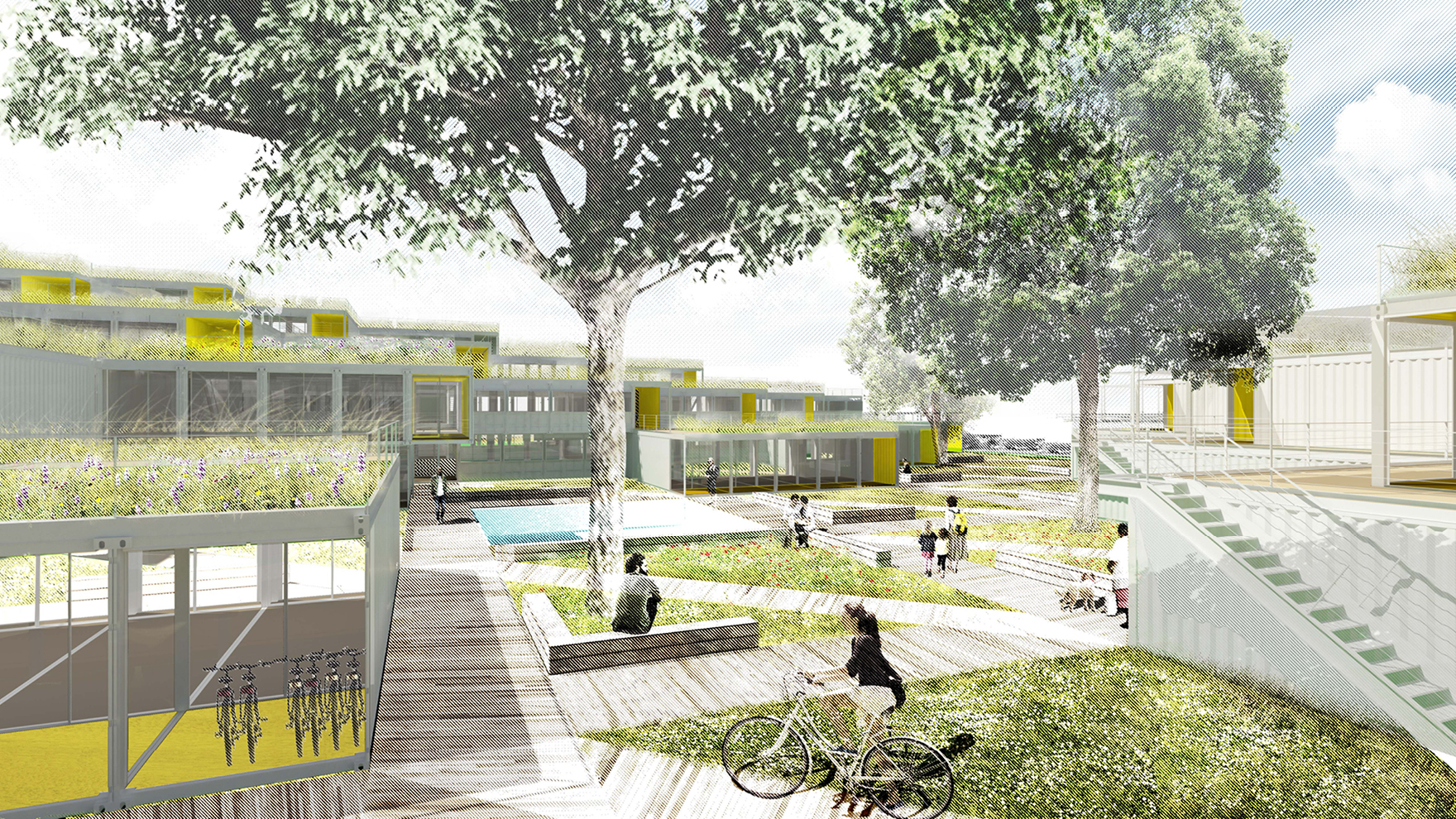
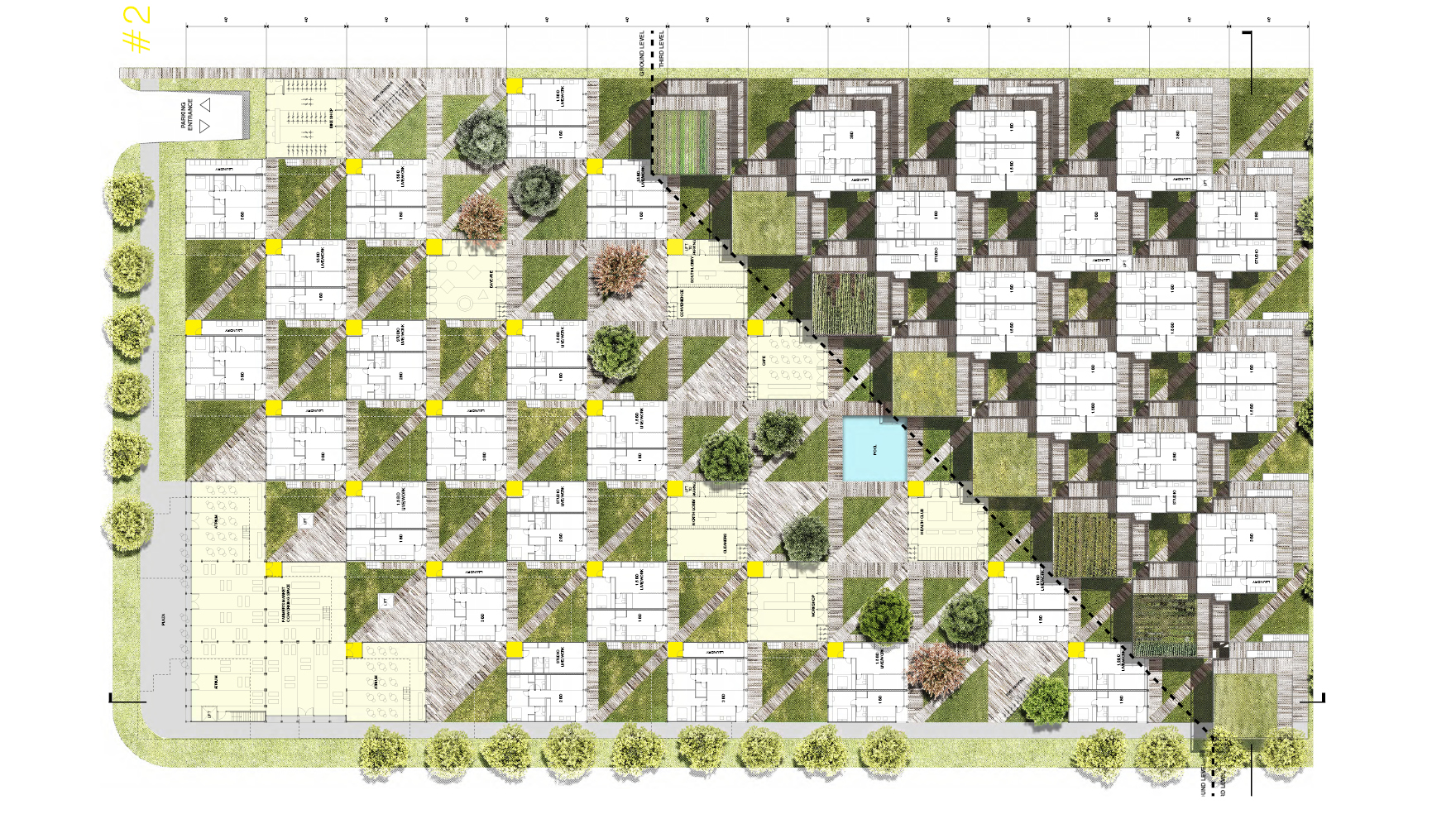
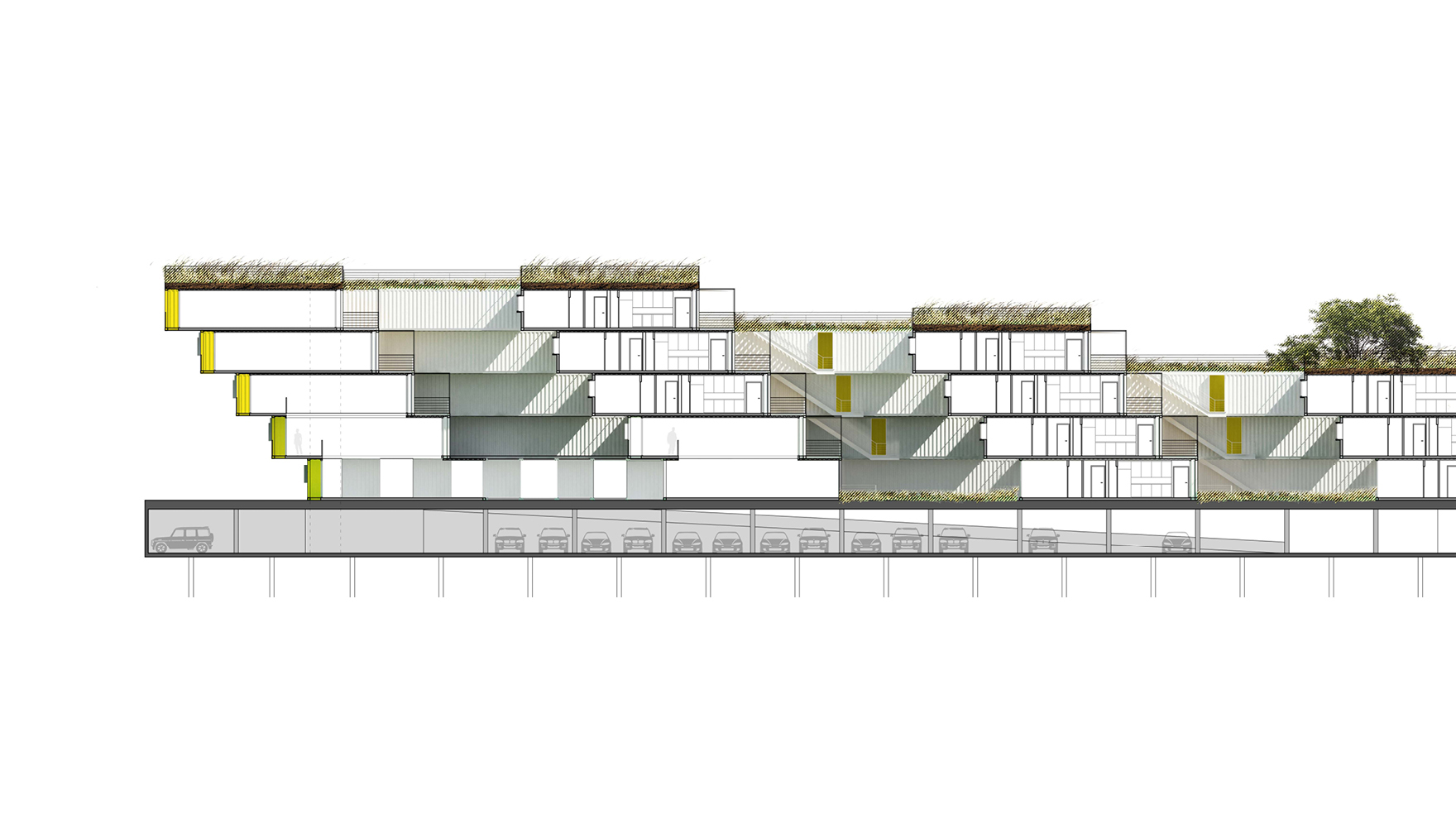
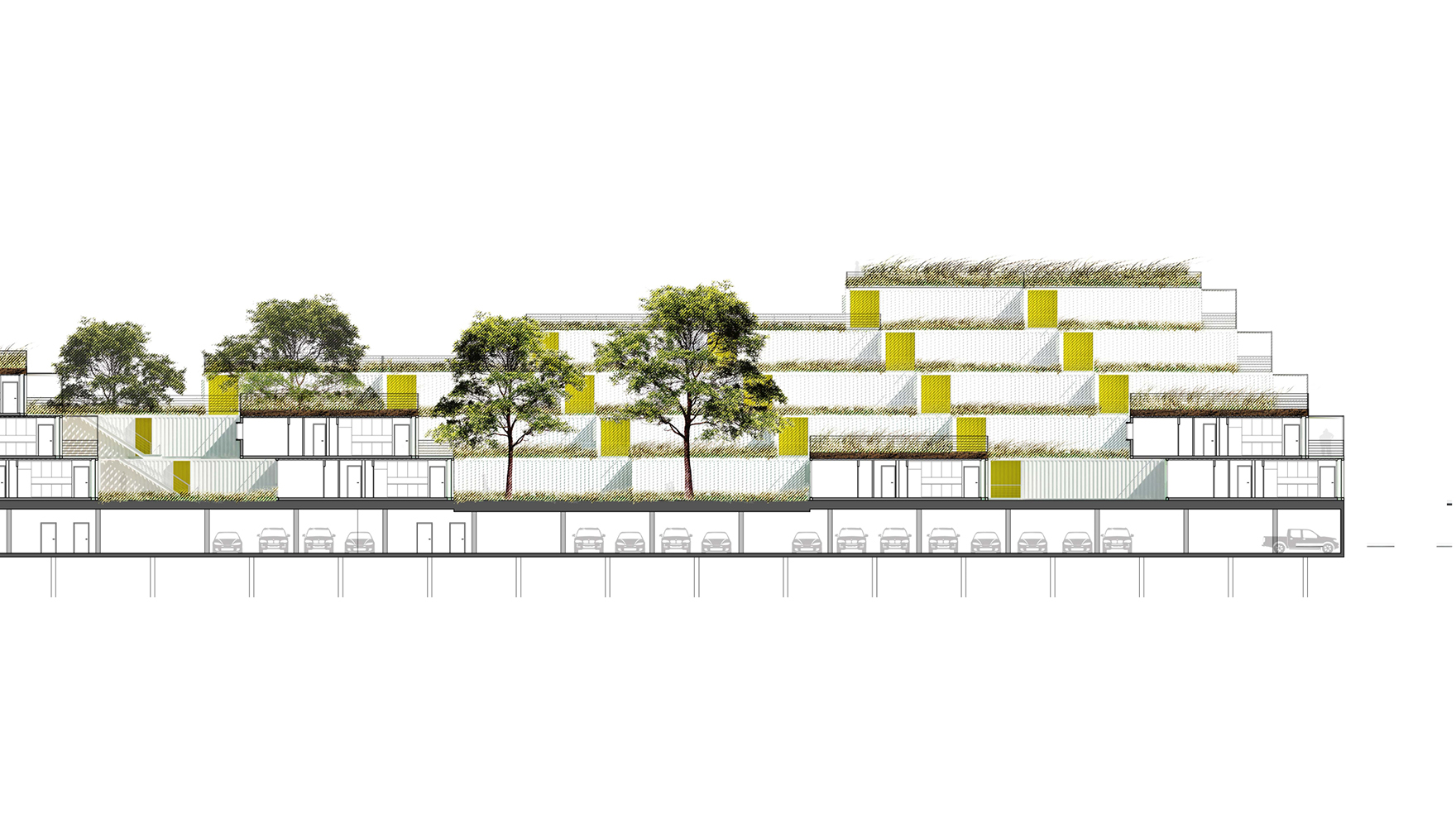
For our field-like site, we propose a field of homes growing gradually out of the land, stepping up to its highest five-story point at the most heavily-trafficked corner at SE 14th Street and SW A Street, and rising more gently to the same height at its opposite southeast corner, near existing single-family homes. Between these two corners, a valley is defined by a grassy grade-level commons or concourse that we are calling the Crossroads: an acre of greensward, crisscrossed by pathways and lined by mixed-use live/work, amenities and plantings that continue up into a green-roof landscape. The site is organized into a checkerboard pattern of some fifty townhouse-scaled blocks (each accommodating simplex apartments) alternating with courtyards. This arrangement ensures a spectrum of public and private outdoor space for residents, maximizes cross-ventilation and views, as well as creating some forty neighborly courtyards within the larger scale of the field. These townhouse blocks are terraced: stepped to the north and west, optimized for shade, providing private porches, high-visibility sheltered circulation space, and making of the field’s northwest corner, a retail area, a prow-like landmark at the major commercial intersection.
program & use
Looking at the landscape and townscape of Bentonville, we see a patchwork: of old and new, traditional and contemporary, commercial and residential—as well as figure and ground, with some blocks filled by buildings and others wide open. At the heart of town, some blocks of the square grid are filled by traditional street-edge and some with more monumental civic buildings; similarly, some blocks are more informally open-air as parking or service space, while other blocks are more formally open as parks and special gathering places like the courtyard square. Across this patchwork grid are weaving diagonals, from large-scale arterial roads to delicate bike and hike paths. We see the same balance of figure and ground, of a patchwork grid and weaving diagonals, at Arkansas Crossing, which learns from the urban fabric of Bentonville and applies the same pattern, at a finer grain and rhythm.
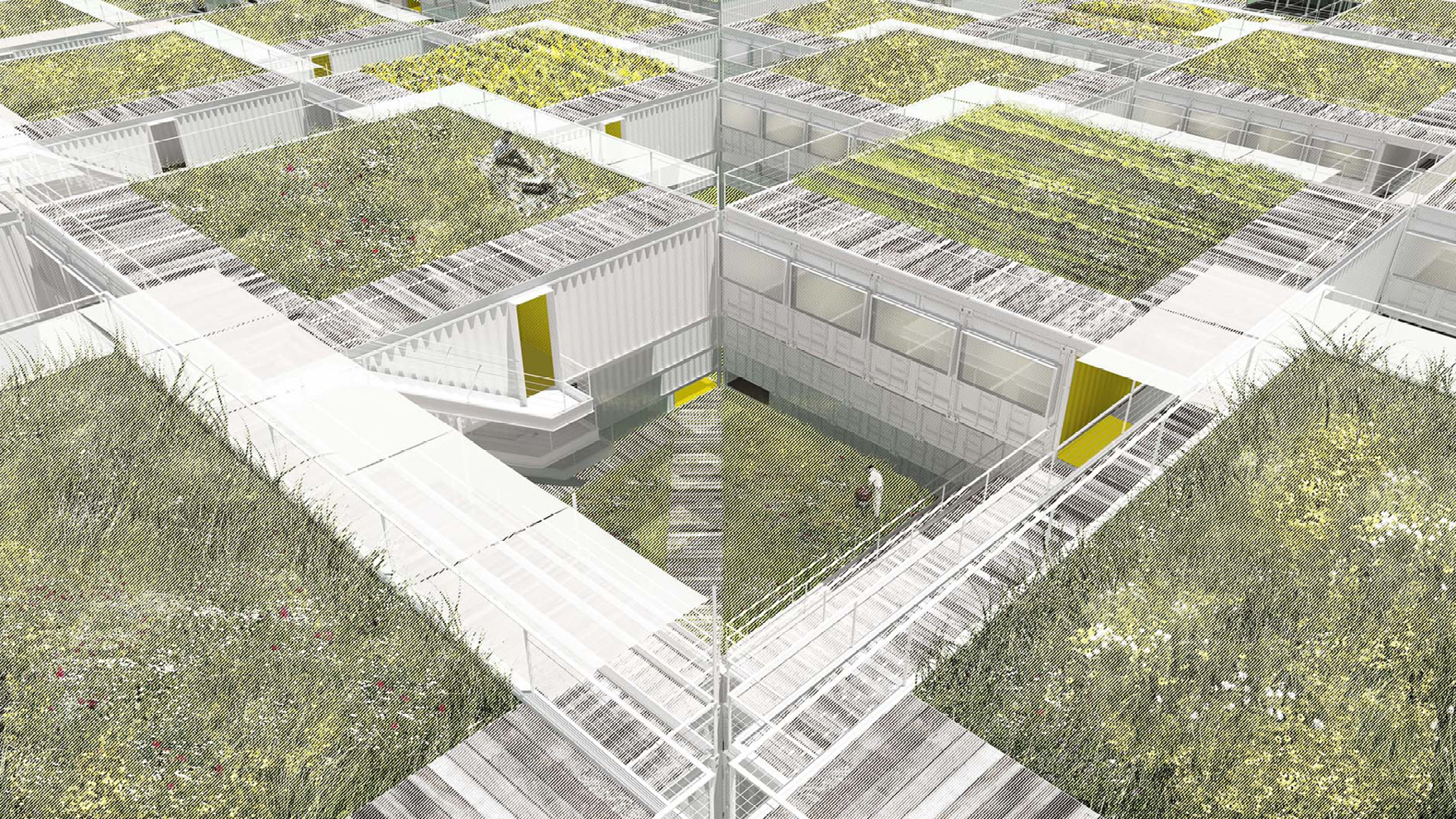
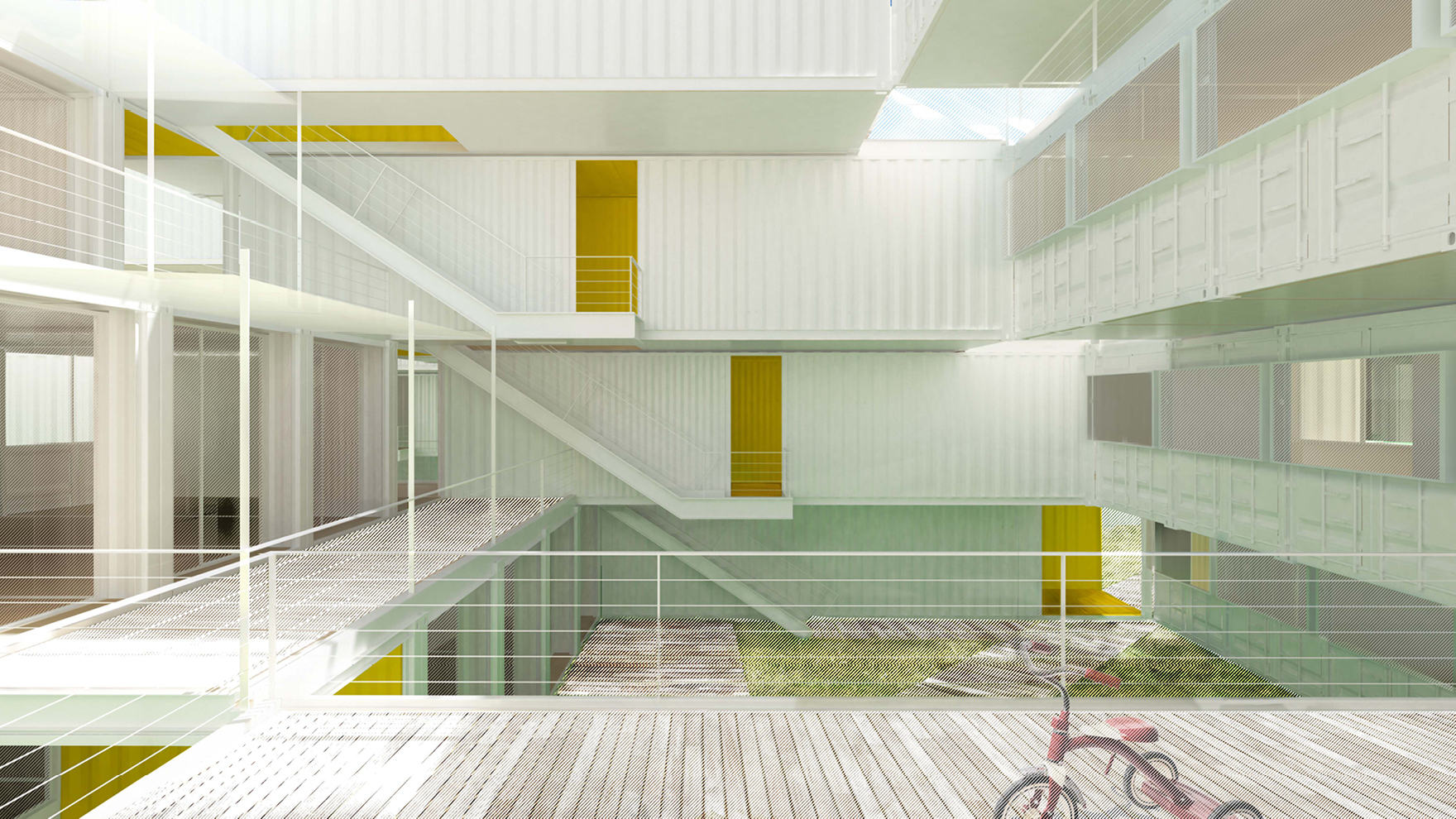
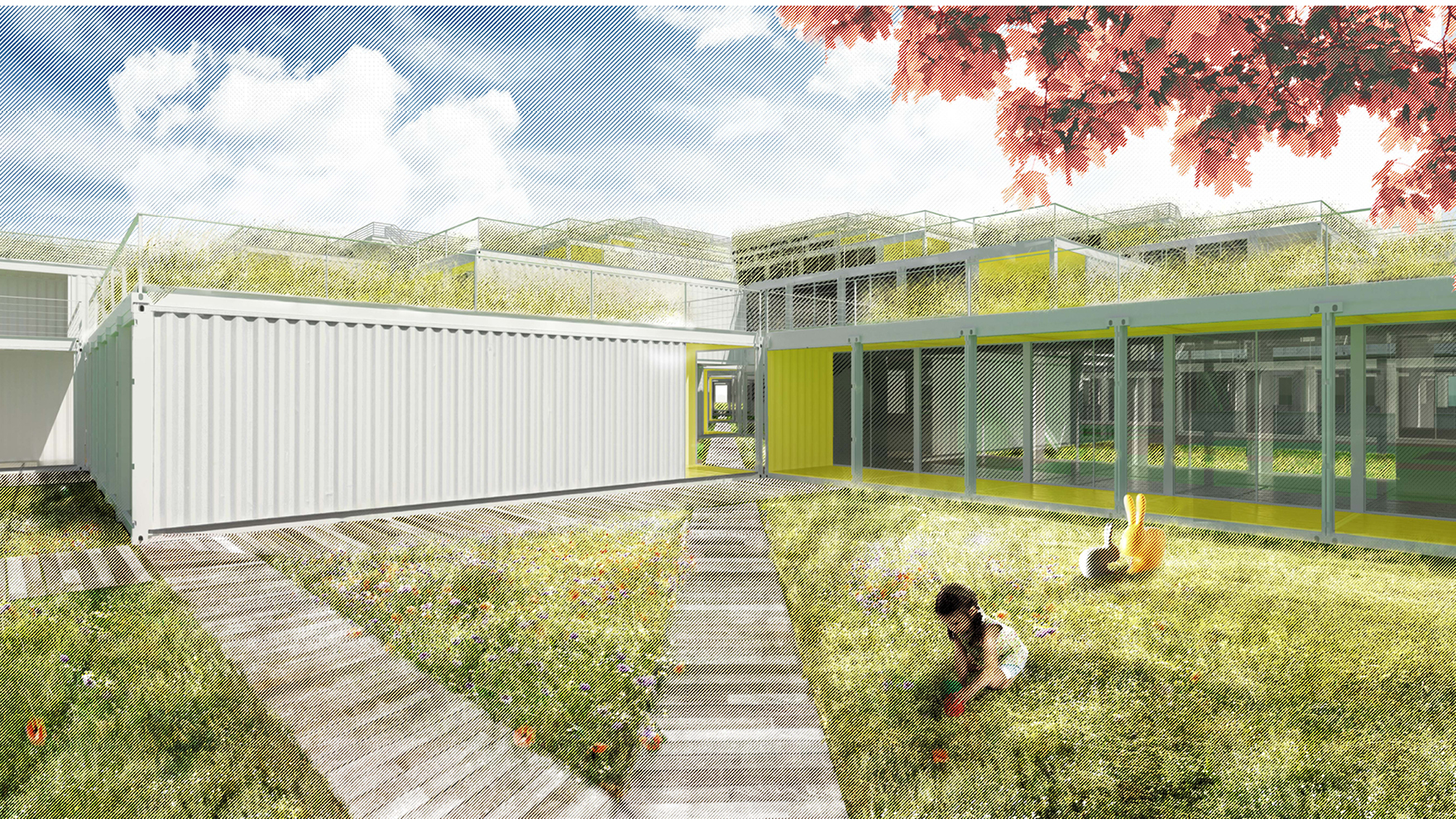
Generous Common Spaces are woven throughout the site, at multiple scales from a sweeping central Crossroads common green, to Courtyards overlooked by private terraces, to sheltered outdoor staircases and entryways, to shared green roof community gardens.
We envision two types of retail or commercial space at Arkansas Crossroads: first, smaller-scaled storefront and amenity-type services along the central Crossroads greensward, and second, a larger commercial element anchoring the complex at its landmark northwest corner. This element features dining as well as, we suggest, maker-space and co-working space for creative and start-up enterprises, lining a five-story atrium; the green roof above this element, at the project’s highest point, facing north to central Bentonville, could serve as a destination lookout and event space for all of Bentonville.
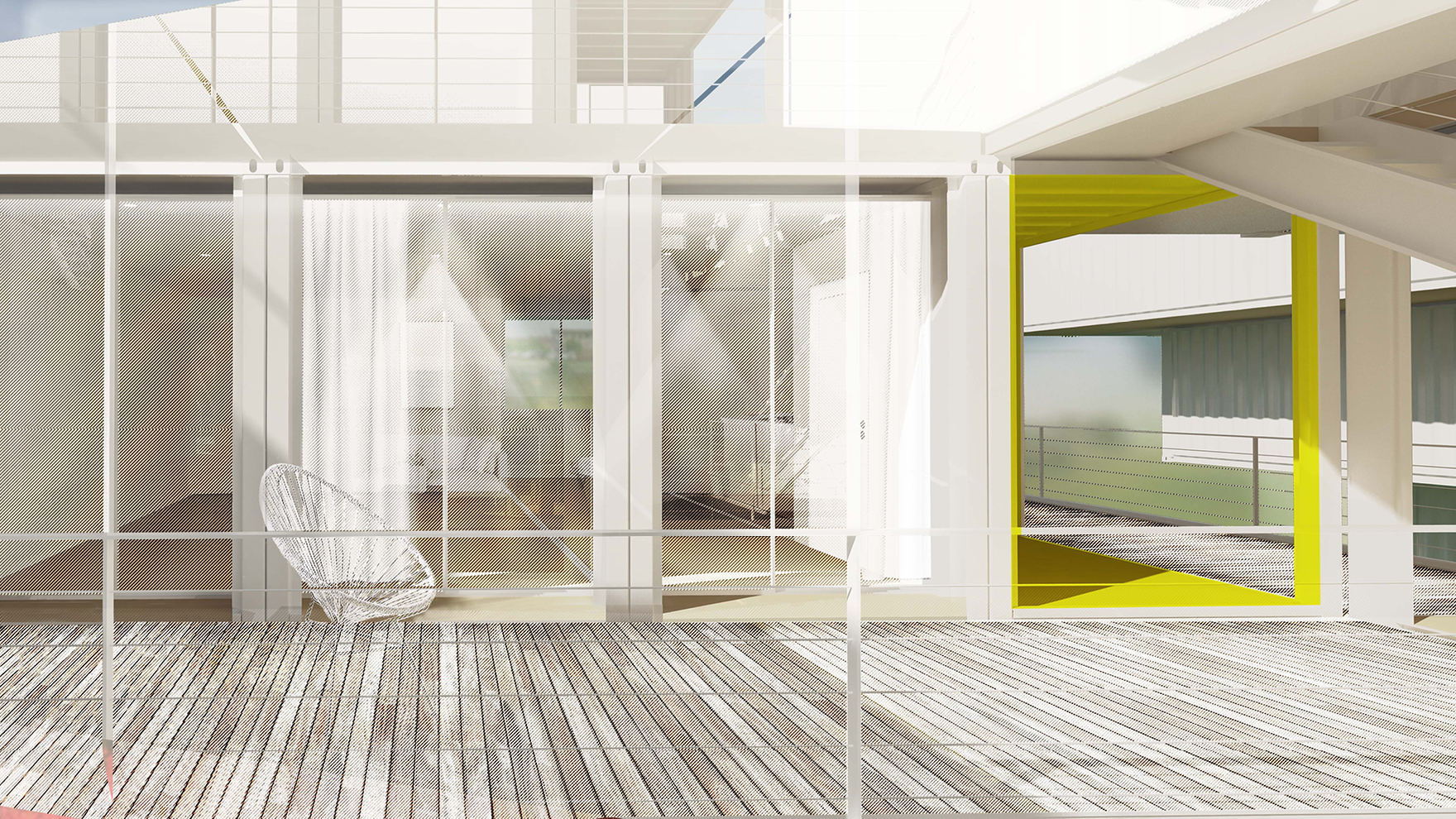
Residences of different sizes, from studios to three bedrooms, are distributed evenly throughout the parcel, rather than being clustered or stacked in types. Live/work residences, however, are gathered toward the ground level and facing the central green commons, The Crossing, to benefit from higher foot traffic and accessibility. All homes are single-level simplex layouts, and studios are generally alcove studios with dedicated sleeping areas. Because entryways are generally at the corners of the townhouse blocks, overlooking each Courtyard below, entrance to each apartment benefits from a generous internal diagonal vista. Living, dining, and kitchen spaces are positioned on the south side of each residence, leading directly to the private terraced porches on the north side of every Courtyard as it steps back—expanding the feeling of living space. The eight-foot setback of private terraces, along with operable screens and shades, enables a calibration of sightline privacy for living areas. Bedrooms and more private spaces are tucked into the more shaded and sheltered north side of each residence, along the south side of each Courtyard as it steps out.
impact & significance
The use of the shipping container enables a measure of off-site prefabrication and modes of construction. The regularizing effect of the 8-foot bay, east-to-west, introduces efficiencies of buildings systems and services. The modularity of Arkansas Crossing—assemblies of five shipping containers into a forty-foot square module that is then stacked and arrayed—affords a high degree of adaptability (for example adapting a 2 bedroom and studio module into a 3+bedroom module) over the lifetime of the building. Similarly, the configuration of retail, workspace, or other commercial applications along the street edge, or the configuration of amenity and community spaces along the interior Crossroads commons, can similarly adapt responsively to a growing and changing community.